

From the moss-covered forests of the Pacific Northwest to the sunny hillsides of Southern California, the West Coast is one of the most environmentally conscious regions. Homeowners here aren’t just dreaming about beautiful spaces — they’re building homes that are energy-efficient, climate-resilient, and environmentally responsible. If you're planning to design and build a custom home or remodel/addition project on the West Coast, or in another area of the country, sustainability shouldn’t be an afterthought, but it should be a guiding principle.
At H2D Architecture + Design, our architecture and interior design team works with our clients to develop custom designs to meet the client’s design vision, respond to the site conditions, and support a healthier planet.
Why Sustainability Matters
When you are building or remodeling your home, you are making choices that will last for decades — choices that shape how you live, how much you spend on utilities, how healthy your indoor environment will be, and how your home impacts the planet. For every home, the environmental footprint needs to be considered. From the materials used in construction to the energy needed to heat, cool, and power space, our homes contribute significantly to global carbon emissions.
Consider building with a high-performance and tight building envelope, which will affect the energy efficiency of the home and save on utility costs for the lifespan of the home. With the high-performance building envelope, the design team will consider how the wall and roof assemblies are designed to be built with increased insulation to reduce thermal transfer, tight and properly installed high-quality weather and air barriers, and efficient windows and doors. The building envelope is the key to developing a home that will be long-lasting, energy-efficient, and comfortable. Once the building envelope has been designed to be tight and super insulated, efficient HVAC systems sized specifically to your home, and smart home technology, can drastically reduce the energy your home uses. Incorporating solar power or designing for future solar integration can even eliminate energy bills altogether. These smart choices lead to substantial savings over time and make your home more comfortable year-round.
In many parts of the country, especially on the West Coast, sustainability also means using water and energy resources more wisely. Drought and water restrictions are increasingly common. These challenges should be addressed by considering features such as low-flow plumbing fixtures, recirculating systems, drought-tolerant landscaping, rainwater harvesting, and greywater reuse systems. These not only reduce your dependence on public utilities but also build resilience into your home for the future.
Another key to consider is the direct impact the built environment and finish materials can have on your health and well-being. Homes built with non-toxic or low-toxic materials, proper ventilation systems, and lots of natural light offer better indoor air quality and a more pleasant living environment. Considering low- and non-toxic materials for the home can help minimize pollutants and allergens, off-gassing, and help increase the overall air quality in the home. Additionally, long-term durability for both interior and exterior materials by using materials that stand up to weather, fire, and wear will set the home up for a long-life span. Exploring ways to handle climate extremes and power outages more effectively.
Ultimately, building sustainably is about doing better — for yourself, your family, and the planet. With today’s knowledge, technology, and materials, there’s no reason to stick with “business as usual” construction that wastes energy, pollutes, or falls short of performance expectations. A sustainable home is an investment in comfort, savings, health, and the kind of world we want to live in.
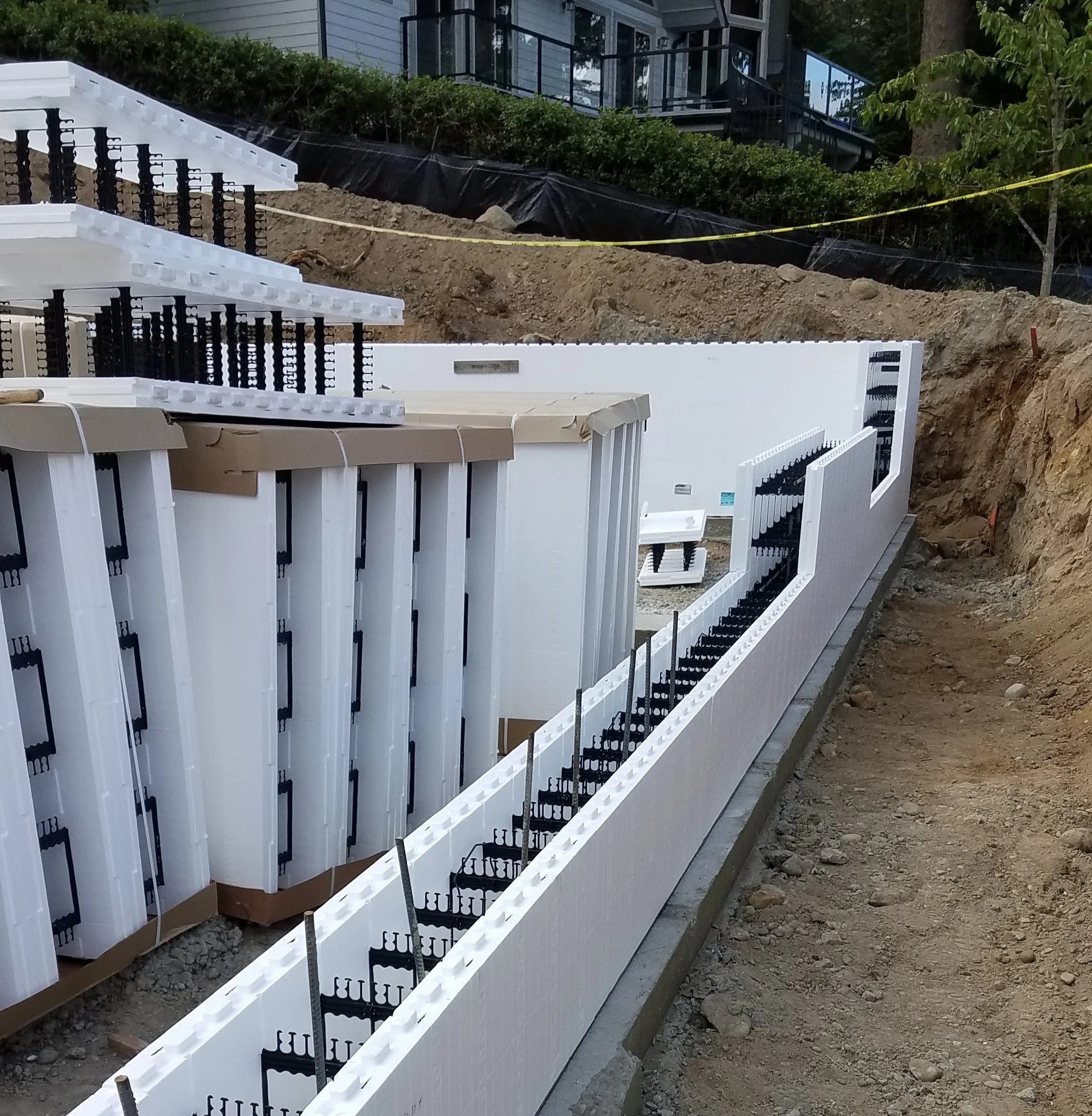
Our Guemes Island Cabin was built with Insulated Concrete Forms (ICF) creating an energy-efficient building envelope.
Sustainable Design Principles
1. Energy Efficiency: A sustainable high-performance home is one that is designed to use less energy. Utilizing energy-efficient-focused construction assemblies and materials is a great place to start, such as:
Tight building envelopes (i.e. proper installation of the weather and air barriers, careful installation of windows and doors, consider assemblies such as SIPs or ICF, etc.)
High-performance insulation, windows, and exterior wall/roof assemblies
Smart orientation of the building, roofing, and windows for natural light and heat gain
Efficient HVAC system sized specifically to the home
2. Solar Integration & Net Zero Goals: By orienting your home on the site to consider solar access, you can make the natural light work for you. Some design principles to consider are:
South-facing windows = enhanced heat in winter
Roof overhangs = provide summer shading
Thermal mass = stabilizes indoor temps
In many jurisdictions, new homes or large additions are required to include solar panels or a solar-ready design.
While designing the home, the roof pitch, roof orientation, and roof configuration area are important aspects to consider with solar in mind. The site is also important when considering solar on your home. Taking into account nearby trees or structures that could shade the solar panels is important to consider when locating the structure on the site.
3. Environmentally Conscious Materials & Finishes
After considering the orientation on the site and construction assembly, it is also important to consider finish materials that minimize environmental impact:
Reclaimed wood from regional sources
FSC-certified lumber
Recycled-content flooring, tile, or other materials
Low-VOC paints, adhesives and finishes
Durable siding and roofing suited to your climate
Buy local! Using local suppliers helps to reduce the carbon footprint of transportation.
4. Sustainable Systems to Consider
Heat pump HVAC + water heaters
Heat or Energy recovery ventilation system (HRV or ERV) designed specifically for your home
Rainwater harvesting systems: The rainwater could be used for irrigation or for greywater reuse systems
Induction cooking
Smart home controls for lighting, irrigation, and energy monitoring
Ready to Design Your Sustainable Home?
Designing a sustainable high-performance new home is about more than energy savings — it’s about building smarter, living better, and doing right by the environment. It gives you the rare opportunity to combine personal style with environmental impact. With smart design, thoughtful materials, and regional know-how, H2D can help you create a space that’s not just built to last — it’s built to thrive in harmony with the land.
Ready to design your new sustainable home? Let’s talk about climate, lifestyle, and how to bring your vision to life — beautifully and responsibly.