




Seward Park
Industrial
Location: Seward Park neighborhood of Seattle, Washington
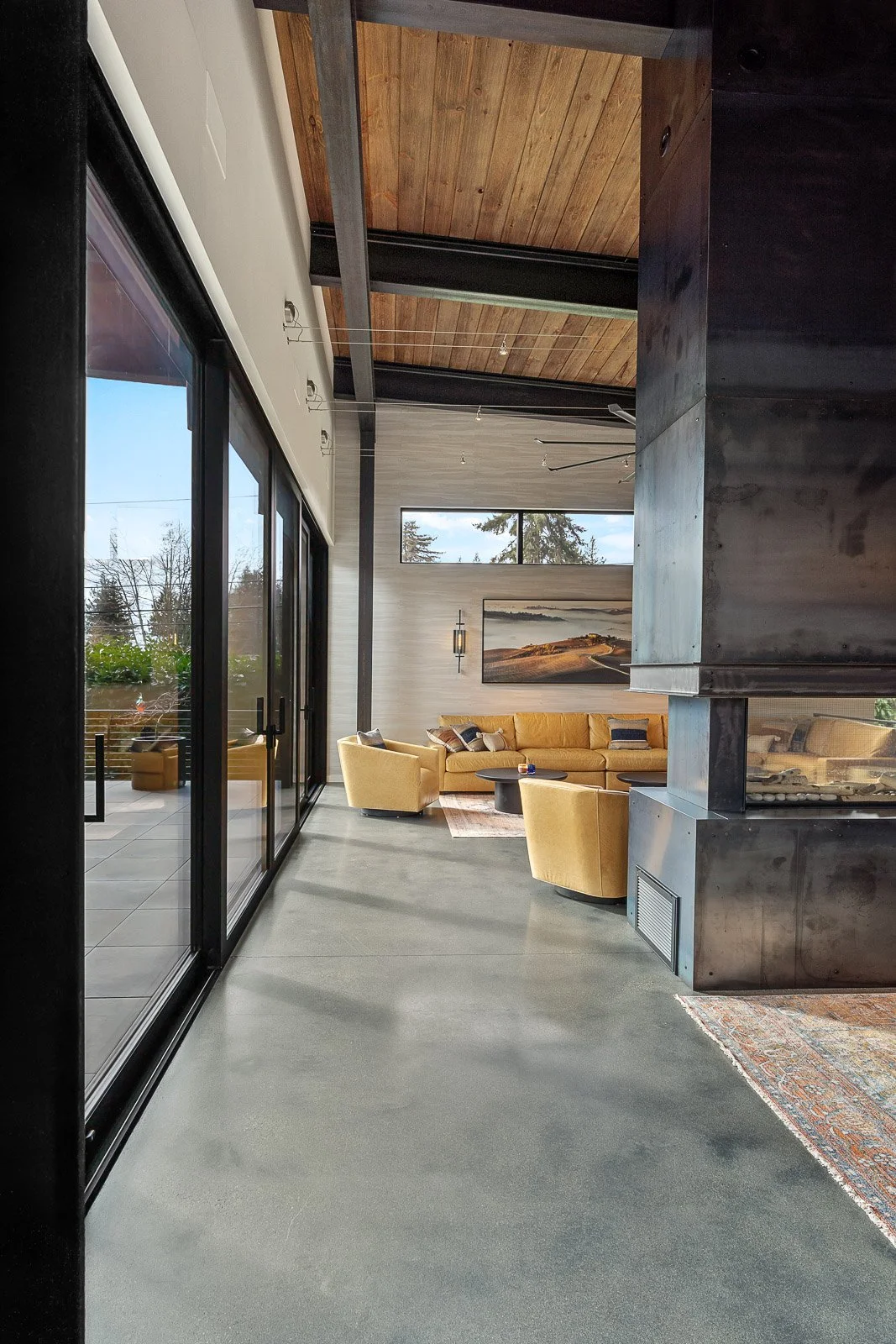
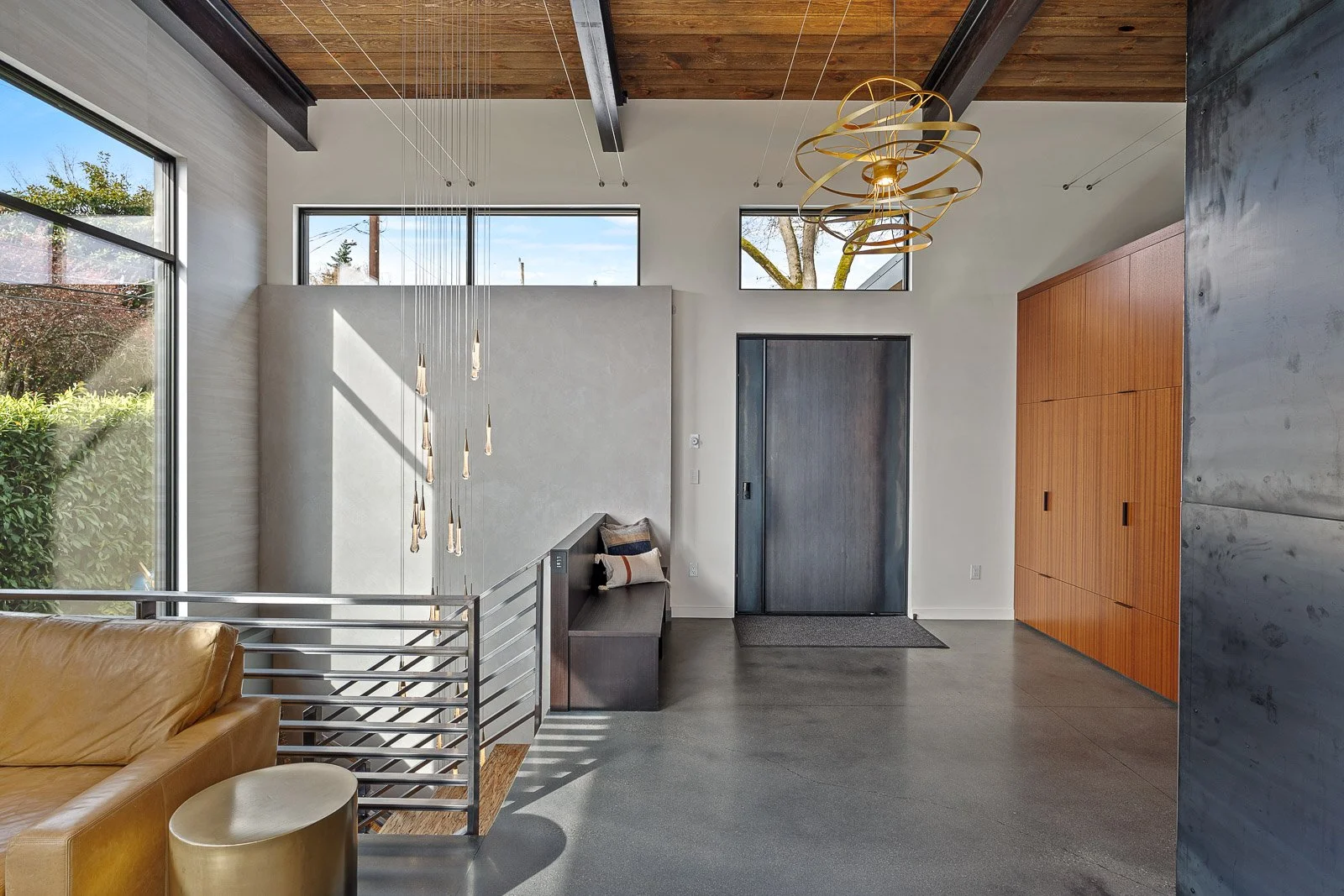
Design Goals: This high-efficiency custom home was thoughtfully designed to replace an aging residence on a prime site near Seward Park in Seattle. The design of the new two-story residence prioritizes sustainability without compromising modern comfort or style. Built to meet Passive House air-tightness standards, the home features a highly insulated exterior envelope, a Structurally Insulated Panel (SIPs) roof system, sustainably sourced wood products, and a state-of-the-art HVAC system providing efficient heating, cooling, and ventilation. The main floor of the home is laid out with an open-concept where the kitchen, dining, and living areas are subtly defined by a striking three-sided fireplace. Expansive sliding glass doors open to an entertaining deck with sweeping views of Lake Washington, creating seamless indoor-outdoor living. The gourmet kitchen is outfitted with high-end appliances, custom cabinetry, concrete countertops, a custom steel pot rack, and a dedicated wet bar. Distinctive interior features include exposed steel beams, polished concrete floors, and industrial materials that reflect the home’s modern aesthetic. Additional highlights include a spa-inspired primary bath with smart shower controls, a temperature-controlled wine cellar, a private office with custom built-ins, and a fully equipped home gym. Blending industrial modern design with sustainable performance, this home delivers refined craftsmanship, energy efficiency, and contemporary Northwest living.
Style: Modern Industrial
Design Challenges + Site Constraints: The natural slope of the lot lent itself to incorporating a daylight basement configuration into the new home. Several mature trees on the property are protected under City of Seattle tree preservation regulations and were required to remain. The building footprint and foundation system were carefully designed to avoid critical root zones and minimize soil disturbance, ensuring long-term tree health. The site was also subject to limits on allowable lot coverage and impervious surface area, beyond which a more complex stormwater detention and drainage system would be required. As a result, the footprint of the home, deck areas, and other hardscape elements were strategically configured to remain below these thresholds and allow for a simplified drainage system. Grading, drainage patterns, and surface materials were coordinated to comply with code requirements while optimizing site functionality and constructability.
Team:
+ Architecture: H2D Architecture + Design
+ Interior Design: Karlee Coble Interiors
+ Built by: Carlisle Classic Homes
+ Photography: Christopher Nelson Photography