

At H2D, we work with clients to design their dream homes and spaces. We are often asked to design homes that meet the needs of our clients now, while also creating a space that works as their needs change- essentially to design a future-proof home.
Future-proof architecture prioritizes flexibility, durability, adaptability, and long-term efficiency. It’s evident in a home that doesn’t require constant renovation yet still adapts to accommodate new family members, support ageing homeowners, or integrate new technology.
A future-proof home isn’t just convenient; at H2D, we believe that it’s a smart long-term investment.
Design for Flexibility
Flexible design allows spaces to evolve, and includes:
Rooms sized to accommodate multiple or flexible uses
Layouts that allow spaces to be divided or combined
Bedrooms that can convert to office space, guest room, or hangout spaces
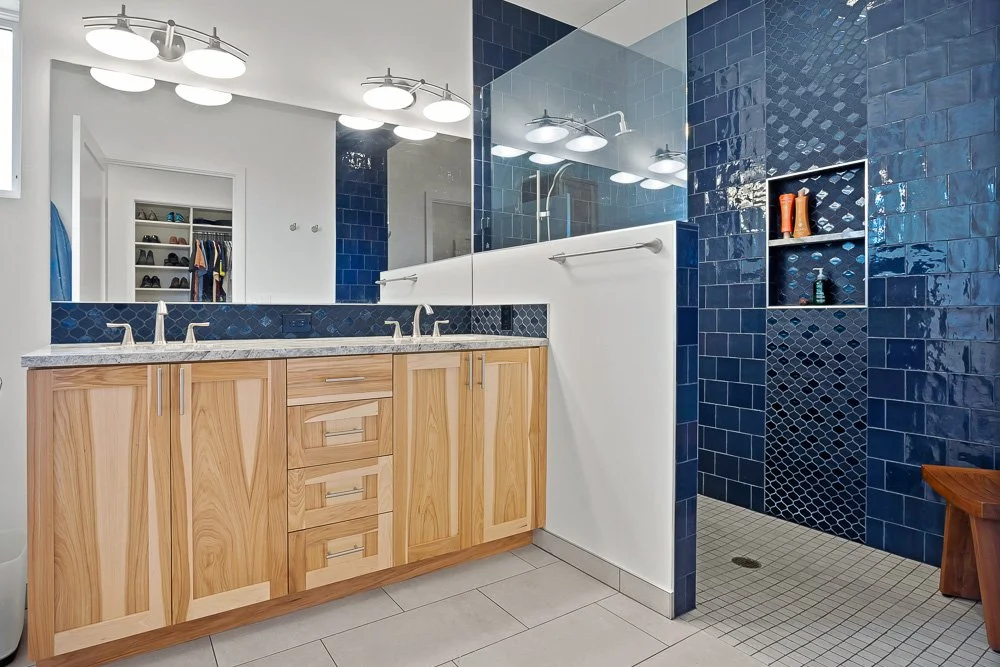
Bathrooms that can be designed for multiple users (i.e., dividing the sink area from the shower and toilet space)
Even seemingly small decisions, like placing windows and doors thoughtfully, can make a room more adaptable over time.
Planning for Life Transitions
Homes should support major life changes without requiring the major disruptions that renovation can require. Thinking ahead to the possibility of expanding families, adult children returning home, aging in place, and caregiving needs allows us to create spaces that work for the long term. By incorporating design strategies such as rough-ins for future main floor laundry spaces, backing for future grab bars in bathrooms, or an accessory dwelling unit that could be used for aging parents, a caregiver, or simply for extra needed income. Exploring options for main floor (single floor) living that allows for access to all the important home functions without the need to go up a flight of stairs, such as kitchen, bathroom, laundry, and bedroom, will allow for the spaces to be more flexible and usable in the long term for both the homeowners and their guests. By anticipating these transitions early, homeowners may be able to avoid costly and complex remodels later.
Durability and Material Choices
Beyond being adaptable, future-proof homes are built to last. Choosing durable materials reduces maintenance, extends the life of the home, and maintains value over time. A few opportunities to include durable materials into the design include:
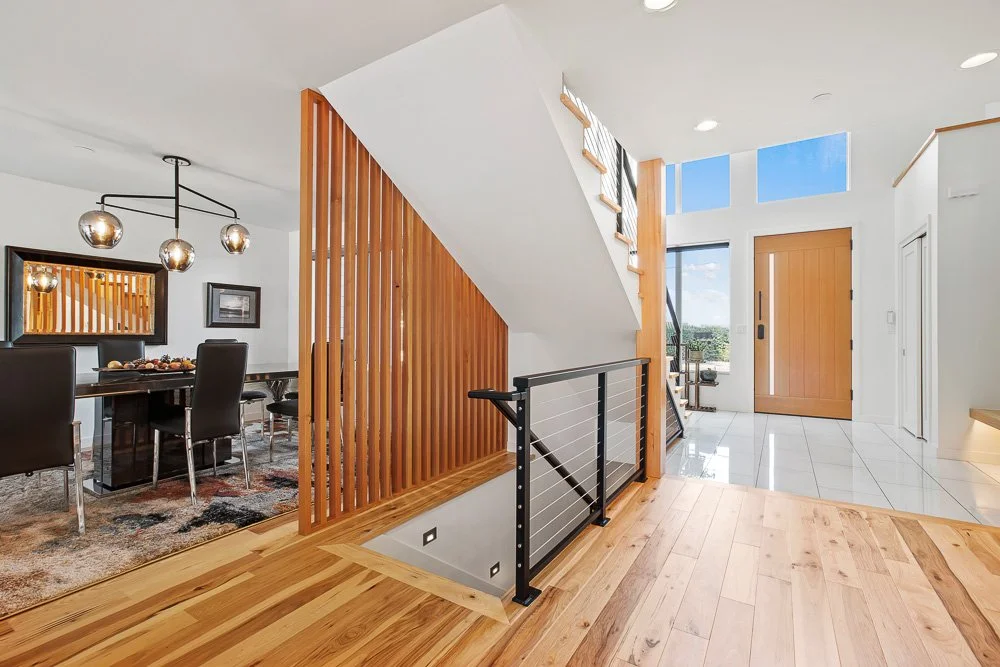
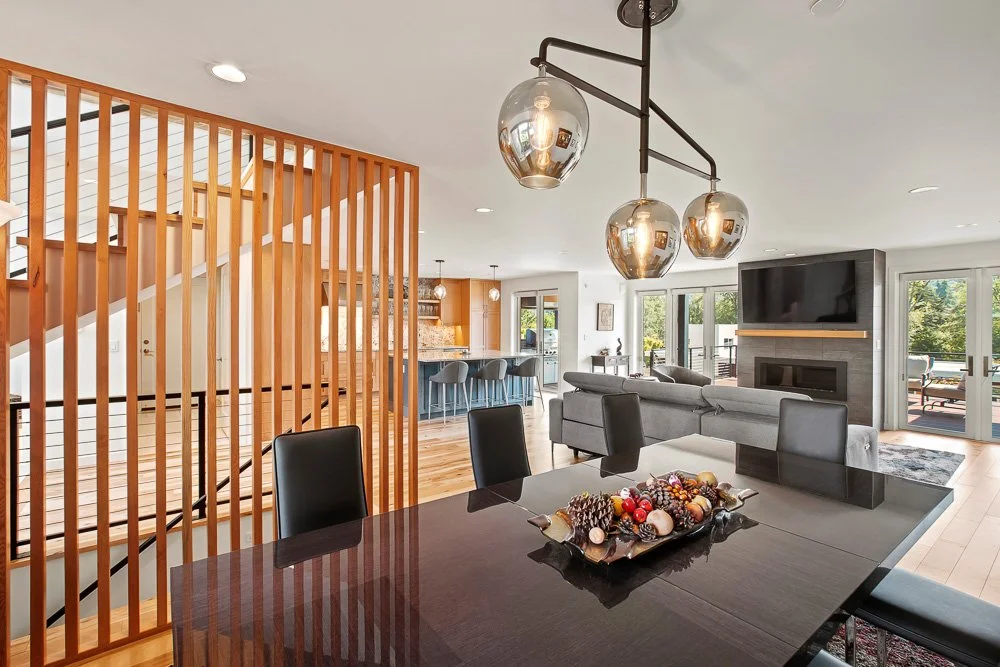
High-quality flooring that resists wear, such as high-quality engineered hardwood or tile
Exterior materials suited to the Pacific Northwest climate, such as standing seam metal roofing or siding with a rainscreen assembly
High-quality windows, doors, and roofing are properly installed and designed for longevity
At H2D, our architects and interior design team work with clients to select materials that go beyond aesthetics. When designing a future-proof home, we combine beauty with functionality.
Design for Energy Efficiency
Climate change and evolving weather patterns have brought energy efficiency to the front of everyone’s mind. Incorporating elements such as a tightly built high-performance building envelope with accommodation for solar or future solar (if possible, on the site), come together to create a home that is:
Less expensive to operate
More comfortable year-round
Better aligned with evolving building standards
Our architects work together with our clients to develop the best strategy for the project, be it a new custom home or a remodel. Even a small change in an existing home can make a big difference over the life of the home, such as replacing aging siding with a new weather barrier, continuous insulation, rainscreen, and cladding.
Technology Integration
Technology will continue to evolve, and homes that can’t adapt will quickly feel outdated.
Future-proof architecture focuses on readiness by:
Installing conduit that allows for wiring to be replaced over time as data and smart home systems evolve
Accessible electrical panels and service areas
Space for future equipment upgrades
Future solar PV accommodations
Accessibility as a Long-Term Strategy
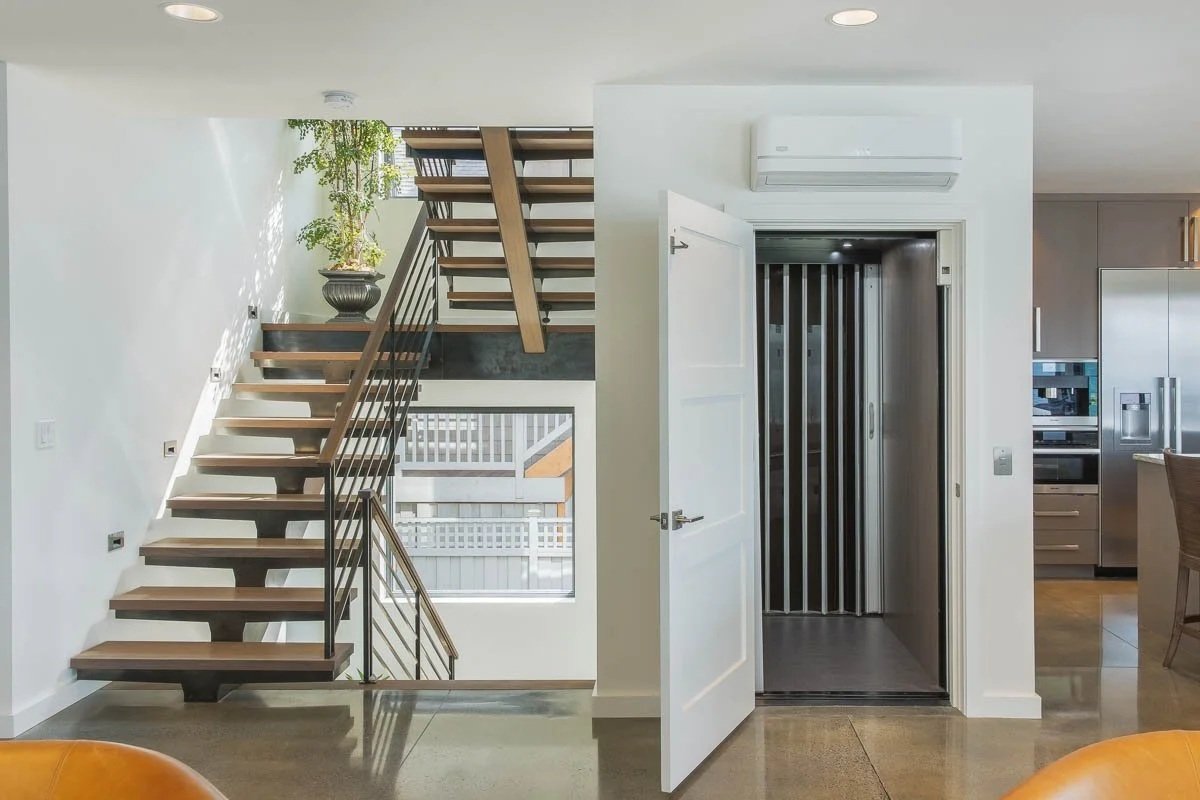
Our Kirkland Waterfront Home includes a residential elevator wh ensures accessibility and adaptability, allowing the homeowners to age in place and enjoy this stunning property for years to come.
Our lives are constantly changing, and keeping accessibility in mind during the design stage ensures our clients are ready to meet those changes. Often accessibility is considered only when it’s needed as homeowners age or become caretakers, but also keeping in mind a time when someone may be on crutches after a sports accident. But, at H2D, we believe it’s simply good planning to think about it during the design phase. Creating spaces that are easier for everyone to use, regardless of age or ability, often looks like incorporating features such as:
Step-free or minimal step entries and living spaces
Wider hallways and doorways to accommodate mobility aids, such as a walker or wheelchair
Main-level living spaces and primary suites
Thoughtfully designed accessibility is carefully and thoughtfully incorporated without standing out.
Designing for Multigenerational Living
Multigenerational living is becoming increasingly common. Whether it’s aging parents, adult children, or extended family, the ability to share a home comfortably is invaluable. The goal when designing for multiple generations is to create independence within a shared environment. There are several ways to accomplish this:
Private suites and flexible living areas
Separate entrances
Sound separation between spaces
Accessory Dwelling Units (ADU) or Detached Accessory Dwelling Units (DADU)
Large common spaces that encourage togetherness
Conclusion: Designing for Change
Future-proof architecture is about embracing the reality that life changes and designing a home that can meet those changing needs.
By prioritizing flexibility, durability, efficiency, and adaptability, H2D helps our clients create spaces that remain functional and meaningful for decades.
Curious to see how H2D could help you build a future-proof house? Contact us to get started!
Looking for more information and inspiration? We recommend checking out our previous blogs: